
How to Choose the Best Compostable Pallet Wrap for Sustainable Packaging
publisherVina
time2025/12/19
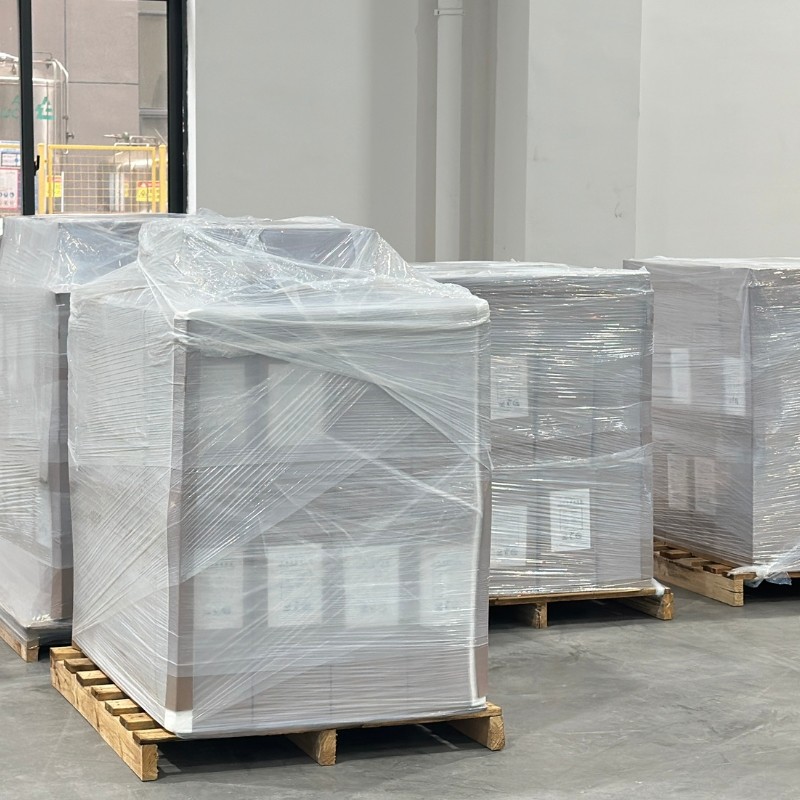
- This comprehensive guide explains how to choose high-performance compostable pallet wrap that matches or exceeds traditional plastic's durability and stretch while offering true industrial composting. Learn about key certifications (ASTM D6400/EN13432), material science behind PLA/PBAT blends, total cost of ownership, and implementation strategies for transitioning to sustainable packaging solutions that reduce environmental impact without compromising load security.
In the complex landscape of modern logistics, where sustainability meets operational efficiency, the choice of packaging materials has never been more critical. Traditional plastic stretch film, while effective in the short term, represents a significant environmental challenge—with billions of pounds used annually and less than 10% effectively recycled.
This comprehensive guide explores how next-generation compostable films are engineered to outperform conventional plastics while offering a genuine circular end-of-life solution, transforming sustainability from a compliance requirement into a competitive advantage.
The Scale of the Challenge
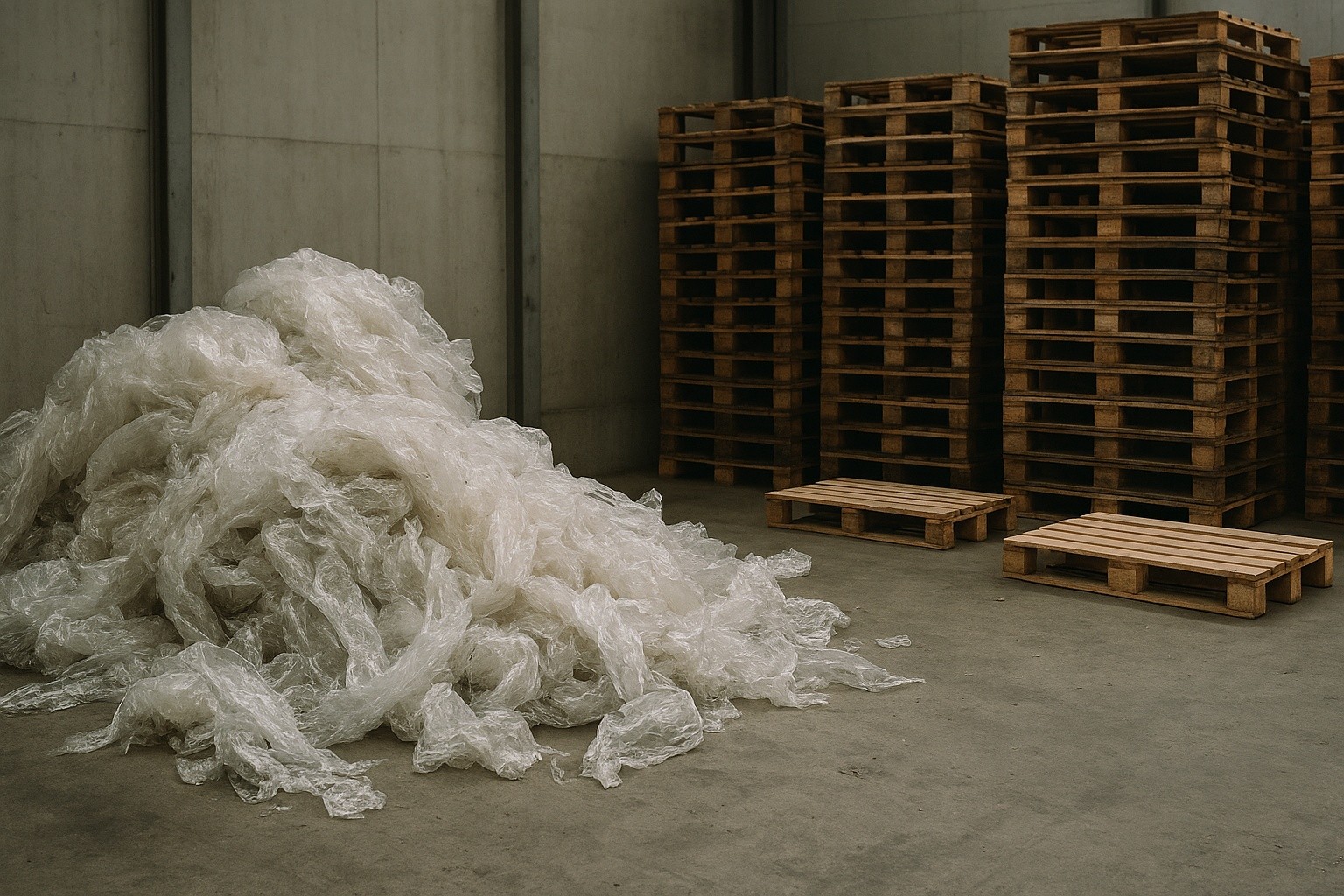
Plastic waste accumulation showing environmental impact
Global consumption of plastic stretch film exceeds 8 million metric tons annually, with packaging applications accounting for over 40% of total plastic production. Less than 14% of this material enters recycling streams, while the remainder contributes to landfill accumulation and environmental degradation.
- Carbon Footprint: Traditional PE film production generates 2.5-3.5 kg CO₂ per kg of film
- Resource Depletion: Petroleum-based, non-renewable feedstock
- Waste Management: 300+ year decomposition timeline in landfills
- Regulatory Pressure: EPR schemes and plastic taxes in 40+ countries
Beyond "Green" Claims

Advanced polymer manufacturing facility
Early iterations of compostable packaging often sacrificed performance for environmental benefits. Today's advanced formulations have overcome these limitations through sophisticated material science and innovative production techniques.
Key Technological Advances:
- Advanced Polymer Blending: Precision-engineered PLA/PBAT ratios for optimal performance
- Nanocomposite Additives: Enhanced barrier properties and mechanical strength
- Smart Manufacturing: Controlled crystallization processes for consistent quality
- Surface Modification: Improved cling properties without compromising compostability
Analysis: Data-Driven Comparison for Compostable Pallet Wrap Selection
| Technical Parameter | Traditional PE Film | Advanced Compostable Film | Performance Delta | Operational Impact |
|---|---|---|---|---|
| Stretch Ratio | 250-300% | 500-600% | +85% to +100% | Reduces film usage by 40-50% per pallet |
| Tensile Strength (MD) | 18-22 MPa | 20-25 MPa | +10% to +15% | Enhanced load stability for heavier goods |
| Elastic Recovery | 45-55% | 65-75% | +20% to +35% | Maintains tension longer, reducing load shift |
| Puncture Resistance | Standard (reference) | Enhanced (120% of PE) | +20% | Better protection for sharp-edged products |
| Machine Compatibility | Optimized | High Compatibility | Equivalent | Seamless integration with existing equipment |
| Clarity & Visibility | High (90%+ transmittance) | High (85-90% transmittance) | Slightly lower | Minimal impact on barcode scanning |
Total Cost of Ownership Analysis
While the upfront cost per kilogram may be 25-40% higher for compostable films, a comprehensive TCO analysis reveals different results:
Direct Cost Factors:
Net Result: When factoring in all operational efficiencies and regulatory benefits, compostable films can achieve cost parity or even savings within 12-18 months of adoption.
Quantifiable Sustainability Benefits
Carbon Footprint Reduction:
Lifecycle analysis demonstrates a 60-75% reduction in CO₂ equivalent emissions compared to conventional PE films, primarily due to:
- Renewable feedstock sourcing (plant-based)
- Reduced energy consumption in production
- Avoidance of incineration emissions
- Carbon sequestration during composting
Circular Economy Contribution:
Unlike traditional recycling (downcycling), composting creates a true circular system:
Essential Compostability Certifications for Sustainable Packaging
- Biodegradation: ≥90% conversion to CO₂ within 180 days
- Disintegration: ≥90% fragmentation within 84 days
- Ecotoxicity: No negative impact on plant growth
- Heavy Metals: Strict limits on regulated metals
- Chemical Composition: Limited volatile solids content
- Quality Standards: Consistent material properties
- Labeling Requirements: Clear consumer information
- Harmonized Standards: Alignment with EU Packaging Directive
- Verification: Third-party testing by approved labs
- Labeling: Clear compostability labeling
- Transparency: Public certification database
- Compliance: Meets ASTM D6400 requirements
- Independent Verification: Third-party European certification
- Industrial Composting: Designed for facilities
- Home Composting: Separate certification available
- Quality Assurance: Regular audits and testing
Implementation Framework: Transitioning to Compostable Solutions
Assessment Phase
- Current film usage analysis
- Waste stream mapping
- Equipment compatibility check
- Regulatory requirement review
Testing & Validation
- Sample procurement and testing
- Performance benchmarking
- Cost-benefit analysis
- Supplier capability assessment
Pilot Implementation
- Limited-scale deployment
- Staff training and education
- Process optimization
- Performance monitoring
Full-Scale Deployment
- Complete transition planning
- Supply chain integration
- Performance reporting
- Continuous improvement
Supply Chain Risks
- Raw Material Availability: Partner with vertically integrated suppliers
- Production Consistency: Require batch testing and quality control
- Lead Time Management: Maintain strategic inventory buffers
- Price Volatility: Negotiate long-term supply agreements
Operational Risks
- Equipment Compatibility: Conduct thorough pre-testing
- Performance Variability: Implement statistical process control
- Staff Resistance: Comprehensive training programs
- Customer Acceptance: Clear communication of benefits
Selecting the Right Supplier: Key Evaluation Criteria
Technical Capabilities
Production Capacity
Sustainability Credentials
Customer Support
Featured Product
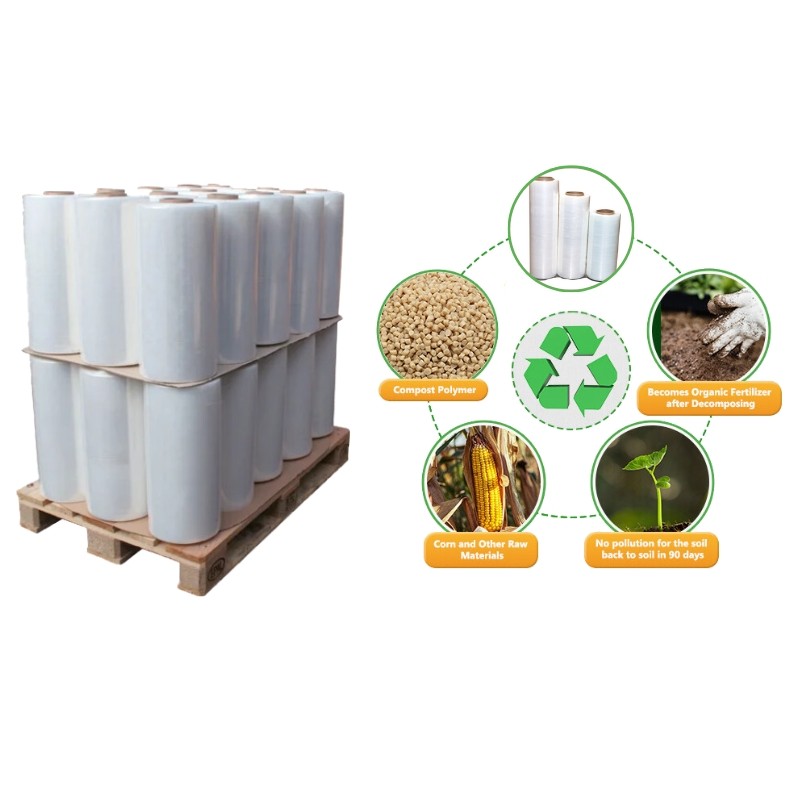
Custom Compostable Stretch Films
- 550% Stretch for tight, secure wrapping
- Made from PLA & PBAT (plant-based)
- Certified ASTM D6400 & EN13432
- Machine & Handheld variants available
Why Torise Biomaterials is a Premier Supplier
For businesses seeking a partner that aligns high performance with genuine sustainability, Torise Biomaterials stands out. As a manufacturer with over 14 years of expertise and a fully integrated supply chain from raw materials to finished products, they offer unmatched reliability and quality control.
- End-to-End Control: Proprietary production of PLA/PBAT resins ensures consistent quality and supply chain security.
- Proven Certifications: Products meet rigorous international standards (ASTM D6400, EN13432) for true industrial compostability, not just green claims.
- Advanced R&D: Dedicated research center with multiple patents drives innovation in bio-based polymer materials.
- Scalable & Customizable: With a large annual capacity and flexible ODM/OEM services, they can tailor solutions from film thickness to branding.
Choosing Torise means investing in a product that delivers the strength and stretch you need, with the certified end-of-life environmental benefits your brand values demand.
Essential Partnership Features
The Future of Sustainable Packaging is Here
Sustainable packaging no longer requires trade-offs. Advanced compostable pallet wrap performs as well as or better than conventional plastics, with genuine environmental benefits: its enhanced stretch, strength, and durability reduce material costs, improve operations, and lessen environmental harm.
Adopting these solutions aligns business values with sustainability, positioning companies as circular economy leaders. This brings competitive advantages like lower regulatory risk, better brand reputation, and connection with eco-aware stakeholders.
Ready to Begin Your Sustainable Transition?
Request samples and technical documentation to validate performance claims and calculate your specific ROI.
Request Samples Now