
Are Compostable Bags Recyclable: The Complete Guide
publisherVina
time2025/11/27
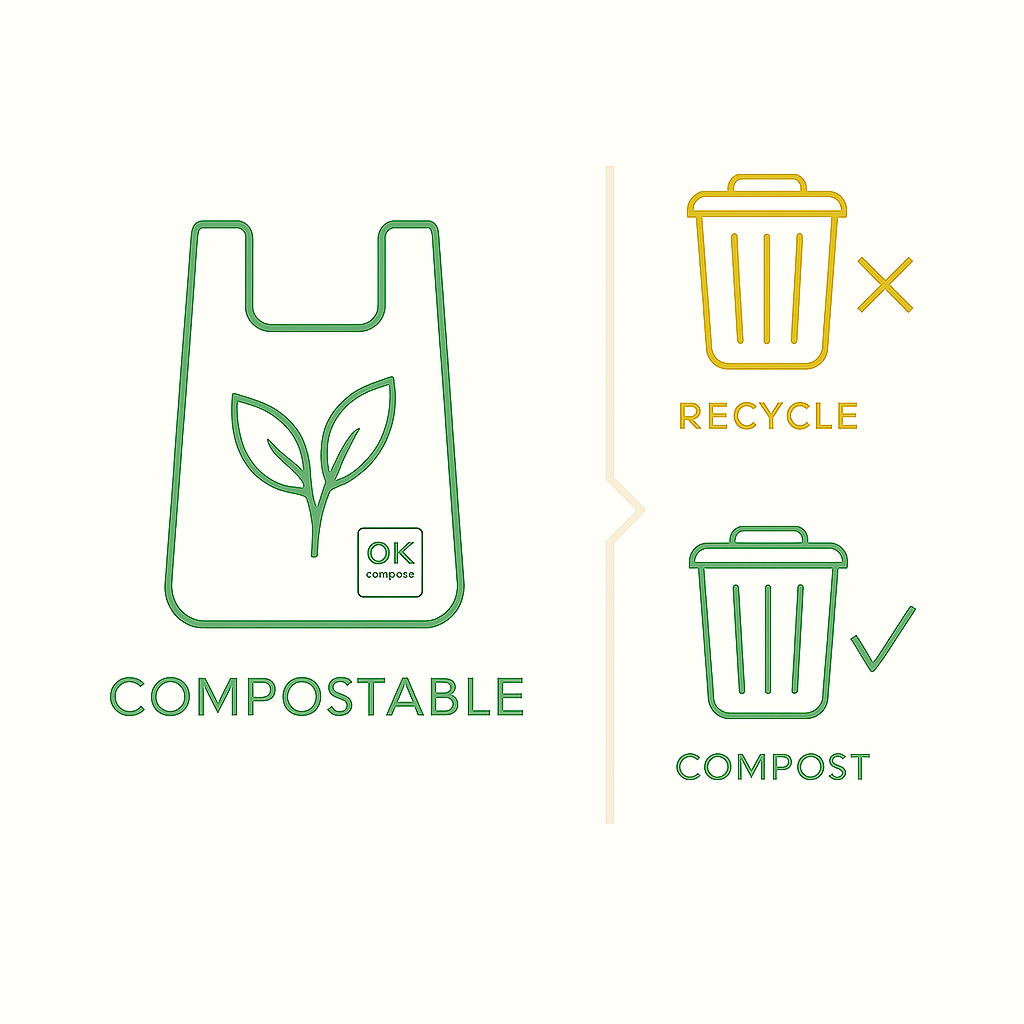
- Discover why compostable bags cannot be recycled and how they contaminate recycling streams. Learn the crucial differences between composting and recycling processes, proper disposal methods through industrial composting, and how Torise Biomaterials provides certified compostable solutions with BPI and OK Compost certifications for genuine sustainability.
You carefully place your compostable bag in the recycling bin, confident you're making the right choice for the planet. But here's the uncomfortable truth: that well-intentioned act is likely doing more harm than good. Compostable bags are not designed for the recycling bin, and mixing the two systems creates a cascade of problems that undermine our collective sustainability efforts.
So why does this happen, and what is the correct path? The answer lies in fundamental differences between how recycling facilities and composting systems operate. To truly honor the purpose of compostable packaging, we must first understand the distinct science and infrastructure that govern its end of life.
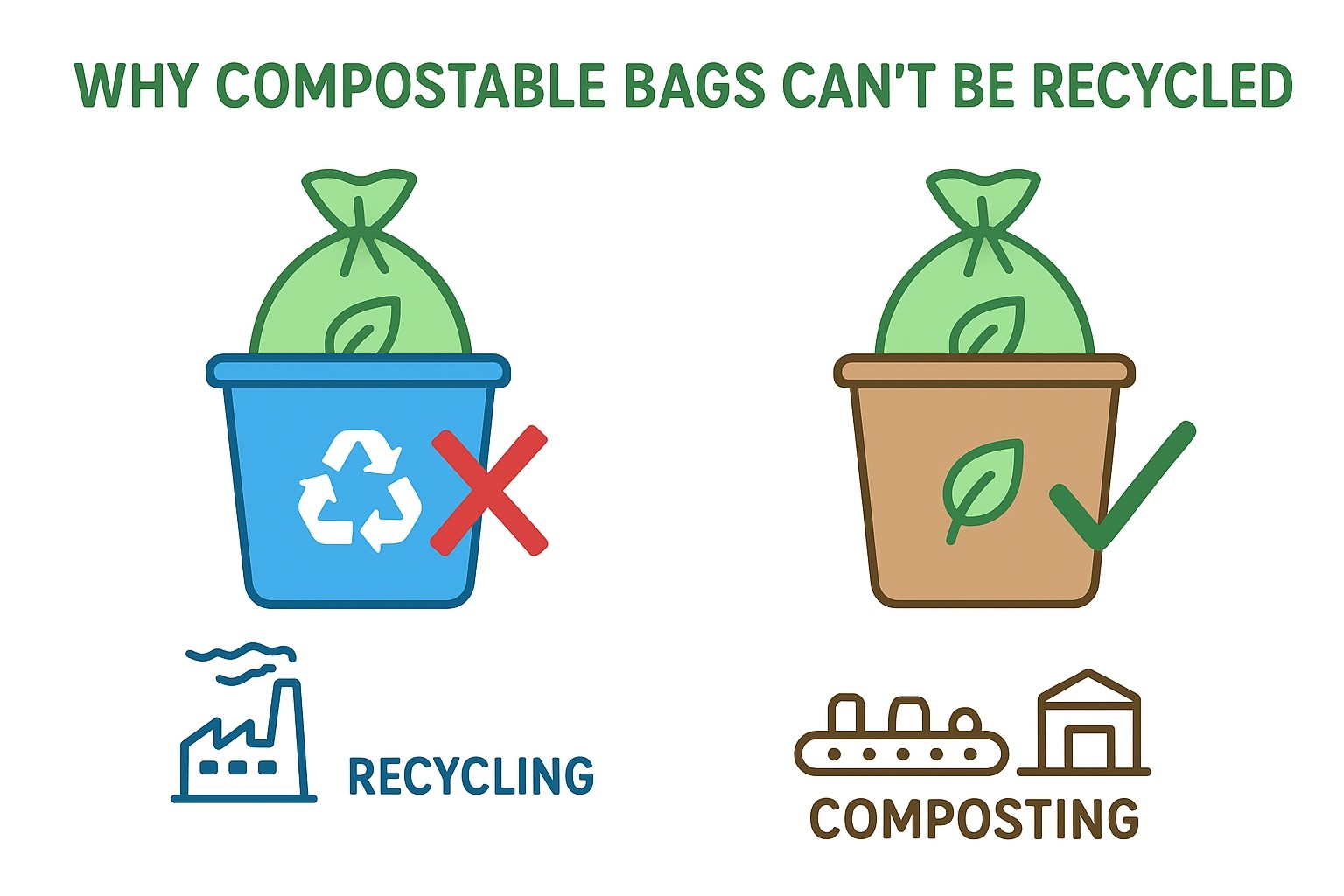
The Fundamental Differences Between Composting and Recycling
Compostable bags and recyclable plastics serve entirely different purposes in the waste management ecosystem, much like how organic waste and glass containers follow separate processing paths. Recycling is designed to recover materials and create new products, while composting facilitates the natural breakdown of organic matter into nutrient-rich soil.
Compostable Bags: Designed to Break Down
- Material Composition: Typically made from PLA (polylactic acid), PBAT, or starch blends
- Molecular Structure: Polymer chains designed to disintegrate under specific conditions
- End Goal: Complete biodegradation into water, CO₂, and organic matter
- Timeframe: 90-180 days in industrial composting facilities
- Required Conditions: Heat (50-60°C), moisture, oxygen, and microbial activity
Recyclable Plastics: Designed for Reuse
- Material Composition: Primarily PET, HDPE, LDPE from petroleum sources
- Molecular Structure: Stable polymer chains that maintain integrity through multiple cycles
- End Goal: Melting and reforming into new products indefinitely
- Processing: Sorting, washing, melting at specific temperatures
- Contamination Tolerance: Extremely low - even small amounts of incompatible materials ruin batches
Why Compostable Bags Disrupt Recycling Systems
When compostable bags enter recycling facilities, they create significant operational and economic challenges that affect the entire recycling ecosystem.
Sorting Facility Disruption
Modern recycling facilities use advanced sorting technology including near-infrared scanners, air classifiers, and optical sorters. These systems are calibrated to identify traditional plastics. Compostable bags often have similar visual and physical properties, causing misidentification and contamination of sorted materials.
Processing Complications
During the melting phase, compostable polymers behave differently than traditional plastics. They may:
- Decompose at lower temperatures than processing requires
- Release gases that create bubbles and weaknesses in recycled materials
- Form incompatible blends that reduce the structural integrity of recycled products
- Clog machinery with sticky residues from partial decomposition
Economic Impact
Contaminated recycling batches may be rejected entirely, resulting in financial losses for municipalities and recycling facilities. The costs of removing contaminants and repairing damaged machinery significantly impact recycling program viability.
Environmental Consequences
When recyclables are contaminated with compostables, both materials often end up in landfills. This wastes the potential of both recycling and composting, increasing overall environmental impact.
Understanding Compostability Certifications
Proper identification of truly compostable products is essential for effective waste management. Look for these trusted certifications:
BPI Certified OK Compost & OK Compost Home ASTM D6400
These certifications verify that products will break down completely in commercial composting facilities within specified timeframes without leaving toxic residues.
Proper Disposal: Ensuring Compostable Bags Fulfill Their Purpose
For compostable bags to deliver their environmental benefits, they must be directed to appropriate end-of-life pathways.
Industrial Composting is Key
Compostable bags belong in commercial composting facilities that maintain optimal conditions for decomposition:
- Consistent temperatures between 50-60°C
- Controlled moisture levels
- Regular turning and aeration
- Professional monitoring and microbial management
Check Your Local Guidelines
Composting infrastructure varies significantly by location. Always verify with your local waste management provider about:
- Curbside compost collection availability
- Designated drop-off locations
- Specific guidelines for compostable packaging
Torise Biomaterials: Delivering Certified Compostable Solutions
At Torise Biomaterials, we understand that the effectiveness of compostable packaging depends on both product quality and proper disposal. Our 14 years of specialized research and development in biopolymers has enabled us to create materials that balance functional requirements with reliable compostability.
Certification Integrity
Every Torise product undergoes rigorous third-party testing to verify compliance with international compostability standards. Our certifications include:
BPI Certification
North America's leading compostability certification ensuring proper breakdown in commercial facilities
OK Compost INDUSTRIAL
European standard guaranteeing complete compostability in industrial composting environments
ASTM D6400 Compliance
International testing standard verification for compostable plastic materials
Clear Labeling
Prominent disposal instructions to guide consumers toward proper end-of-life management
Manufacturing Excellence and Customization
Our 50,000 m² manufacturing facility represents one of the industry's most advanced centers for compostable packaging production. We offer:
- Custom formulation for specific application requirements
- Private labeling and custom printing services
- Scalable production capacity for global supply
- Comprehensive quality control from raw materials to finished products
Conclusion: Making Informed Choices for Genuine Sustainability
Compostable bags represent a valuable alternative to conventional plastics when used and disposed of correctly. Understanding that they belong in composting systems rather than recycling streams is essential for maximizing their environmental benefits and avoiding unintended consequences.
The success of compostable packaging depends on collaboration across the entire value chain—from manufacturers developing properly certified products to municipalities providing necessary infrastructure and consumers following correct disposal practices. Through education, clear labeling, and accessible composting options, we can create a system where compostable packaging fulfills its promise as part of a circular economy.
Ready to Implement Truly Sustainable Packaging Solutions?
Contact Torise Biomaterials to explore our range of certified compostable products and discover how our expertise can support your sustainability objectives with packaging that delivers both functional performance and environmental responsibility.
Contact Our Packaging Experts